
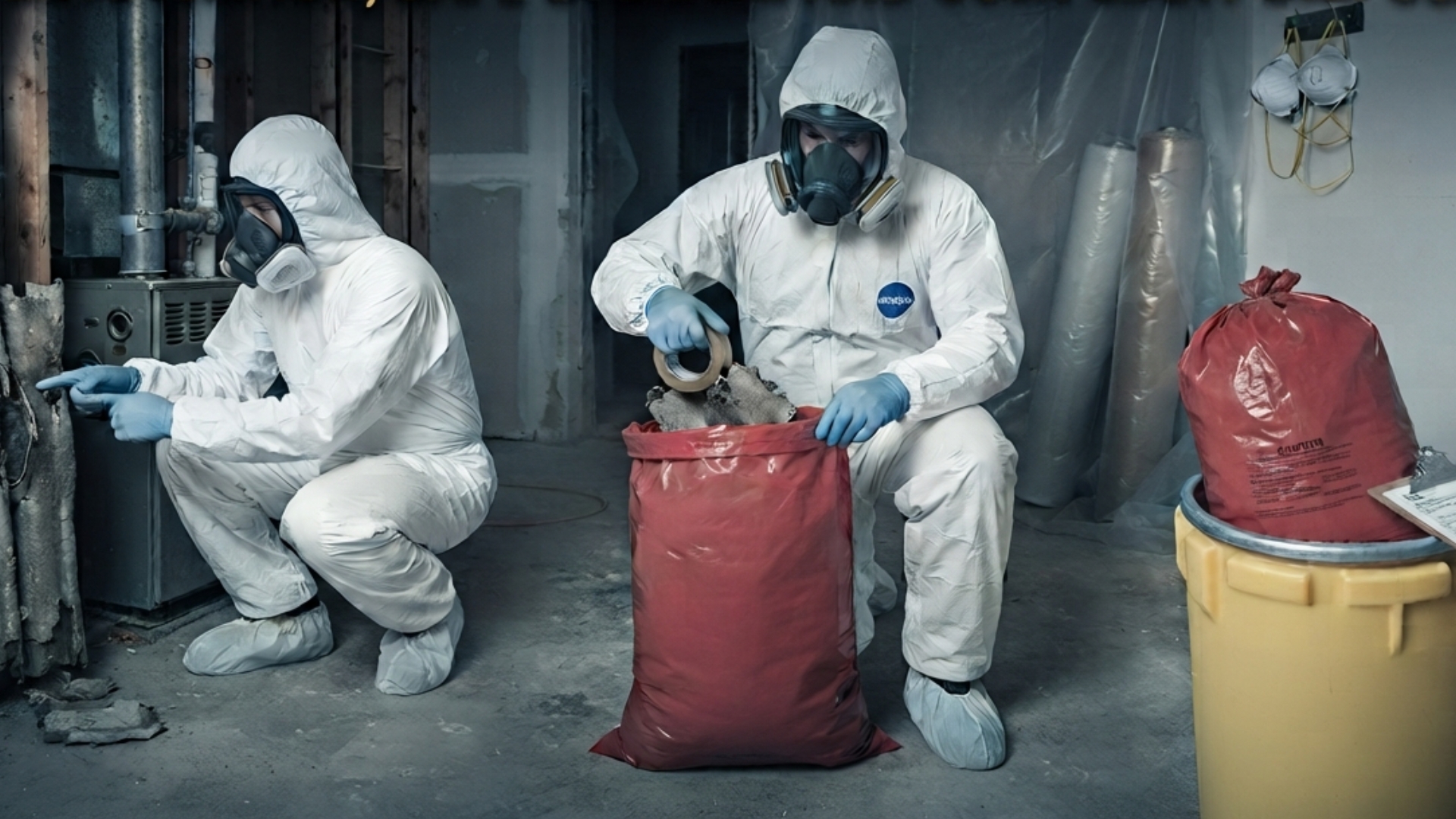
The most dangerous building material of the twentieth century does not look dangerous. It looks like a grey cement sheet on a garage roof. Like old floor tiles under carpet. Like the boring board around a heating duct. Asbestos was the miracle material of its era, fireproof, cheap, endlessly versatile, and it was built into British property on an industrial scale until the full ban in 1999.
Which means one blunt rule of thumb: any building constructed or refurbished before 2000 may contain it, and mesothelioma statistics, still claiming thousands of UK lives a year, explain why the rules around it have no relaxed setting.
This is not a guide to fear. Intact, undisturbed asbestos is generally managed safely in place every day across the country. This is a guide to the two moments that actually matter: the moment of suspicion, and the moment of disposal.
The Moment Of Suspicion: Stop Beats Sorry
Asbestos turns up in renovation and clearance work far more often than in dramatic discoveries: the garage roof coming down, the old boiler cupboard being stripped, the floor tiles lifting stubbornly, the soffits on the 1970s extension.
The one thing everyone should know is also the simplest: you cannot identify asbestos by eye. Not builders, not surveyors, not us. Cement sheet, insulation board, and their harmless lookalikes are indistinguishable without laboratory analysis of a sample, and the analysis is quick and cheap.
So the protocol at the moment of suspicion has three steps. Stop work around the material. Do not cut, drill, break, or sweep it, because asbestos is dangerous precisely in proportion to the fibres disturbed into air, and dry sweeping is the classic self-inflicted exposure. Get it tested before anyone decides anything, because the sample result determines the whole legal route that follows.
For businesses there is a standing duty before any of this: whoever controls maintenance in a pre-2000 non-domestic building holds the duty to manage asbestos, meaning a survey, a register, and a plan, so that the boiler-cupboard surprise happens on paper years before it happens to a maintenance fitter’s drill.
Licensed, Notifiable, Or Neither: Who May Do What
Asbestos work sits in legal tiers, and honesty about the tiers is the mark of a trustworthy contractor.
The high-risk materials, sprayed coatings, pipe lagging, and most asbestos insulation board work, are licensable: removal is legally reserved for HSE-licensed asbestos contractors working under controlled conditions. No general builder, no waste company, and no brave site manager substitutes for that licence, and anyone offering to should be shown the gate.
Lower-risk work, typically on intact asbestos cement products, can lawfully be done outside the licensing regime, but “outside licensing” does not mean casual: precautions, training, dampening, non-destructive handling, and proper containment still apply.
Disposal, in every tier, is hazardous waste disposal. However the material came out, it may only travel sealed and documented, with an authorised carrier, to a facility permitted to accept it. That is where we come in: collection of all types of asbestos, no quantity too small or too large, with containment and bags supplied ahead of time for safe storage before pickup. The paperwork follows the consignment note regime our compliance guide sets out, and the file it creates is your lasting evidence of doing this right.
The combinations matter: a licensed removal contractor strips the lagging, and the sealed waste still needs its compliant route to disposal; a farmer stacks storm-damaged cement sheets, and the stack needs bags, wrapping, and a documented collection. Different beginnings, same disciplined ending.
Storage And The Double-Bag Standard
Between discovery and collection, asbestos waste asks for one thing: stillness, properly packaged.
The standard is double containment with visible warnings: heavy-duty polythene sacks marked for asbestos, one sealed inside another, or double-wrapping in sheet polythene for boards and awkward pieces, sealed with tape rather than hope. Cement products are kept damp during handling to suppress fibre release, moved whole rather than broken to fit, and the sealed packages then wait somewhere secure, away from traffic, weather, and curiosity, until the collection date.
What the standard forbids is equally clear: no open skips, no fly-sheeted trailers, no “it is only a couple of sheets” rides to the tip in an estate car, and never any breaking up of material to save bag space, which manufactures the airborne hazard the bags exist to prevent. Purpose-made bags and containment are cheap, we supply them ahead of every job, and they are the difference between waste and evidence.
For quantities and site situations beyond bags, sheeted loads, secured stillages, and planned uplifts do the same job at scale, with the same destination: a permitted facility, via consignment note, into your three-year file.
The Costs, And The Grim Economics Of Shortcuts
Legitimate asbestos disposal is priced by type, quantity, packaging, and access, and small loads are less expensive than their reputation: a bagged garage roof is a modest, routine collection. Sampling is cheaper still, and surveys scale with buildings, not fear.
The alternative economy is where the real bills live. Fly-tipped asbestos is among the most expensive waste crimes to clean up, and enforcement treats it accordingly; a traced load carries prosecution risk that makes every saved pound spectacular in hindsight, as our consignment note guide explains. And the cash-in-hand removal that disturbs lagging without controls does not save money at all; it spends health, which settles its accounts decades later.
If a price for asbestos work looks impossibly good, the missing ingredient is always the same: the compliance. There is no budget version of this material.
Frequently Asked Questions About Asbestos Disposal
How do I know if a material contains asbestos?
You cannot, by eye. Pre-2000 building plus suspect material equals sample analysis before anyone proceeds. Testing is quick and inexpensive.
Can we remove it ourselves?
Licensable materials, lagging, sprayed coatings, most insulation board work, legally require HSE-licensed contractors. Some intact cement work sits outside licensing with proper precautions. Disposal is compliant hazardous waste routing in every case.
How should asbestos waste be stored before collection?
Double-bagged or double-wrapped with asbestos warnings, sealed, damp where appropriate, undisturbed, and secured. We supply bags and containment ahead of collection.
Is there a minimum collection quantity?
No: a few sheets or a whole site, the process is identical, sealed, documented, permitted facility.
What is the duty to manage?
Pre-2000 non-domestic buildings need asbestos found, recorded, assessed, and managed by whoever controls maintenance: survey, register, plan, before any drill meets any wall.
Where do you collect?
Mainland UK from Bedford, up to Glasgow and Edinburgh, on confirmed dates, with consignment paperwork and disposal at permitted facilities under licence CBDU258345.
Treat The Grey Sheet With Respect
Asbestos rewards exactly one attitude: unhurried, uncurious, documented respect. Test before touching, still before sealed, sealed before moved, and every movement on paper.
Priority Haz collects all types of asbestos at every scale, supplies the containment, prepares the consignment notes, and works alongside licensed removal contractors where the law requires them. Request a quote or a callback at priorityhaz.co.uk, and let the most patient hazard in your building leave the boring way.

