
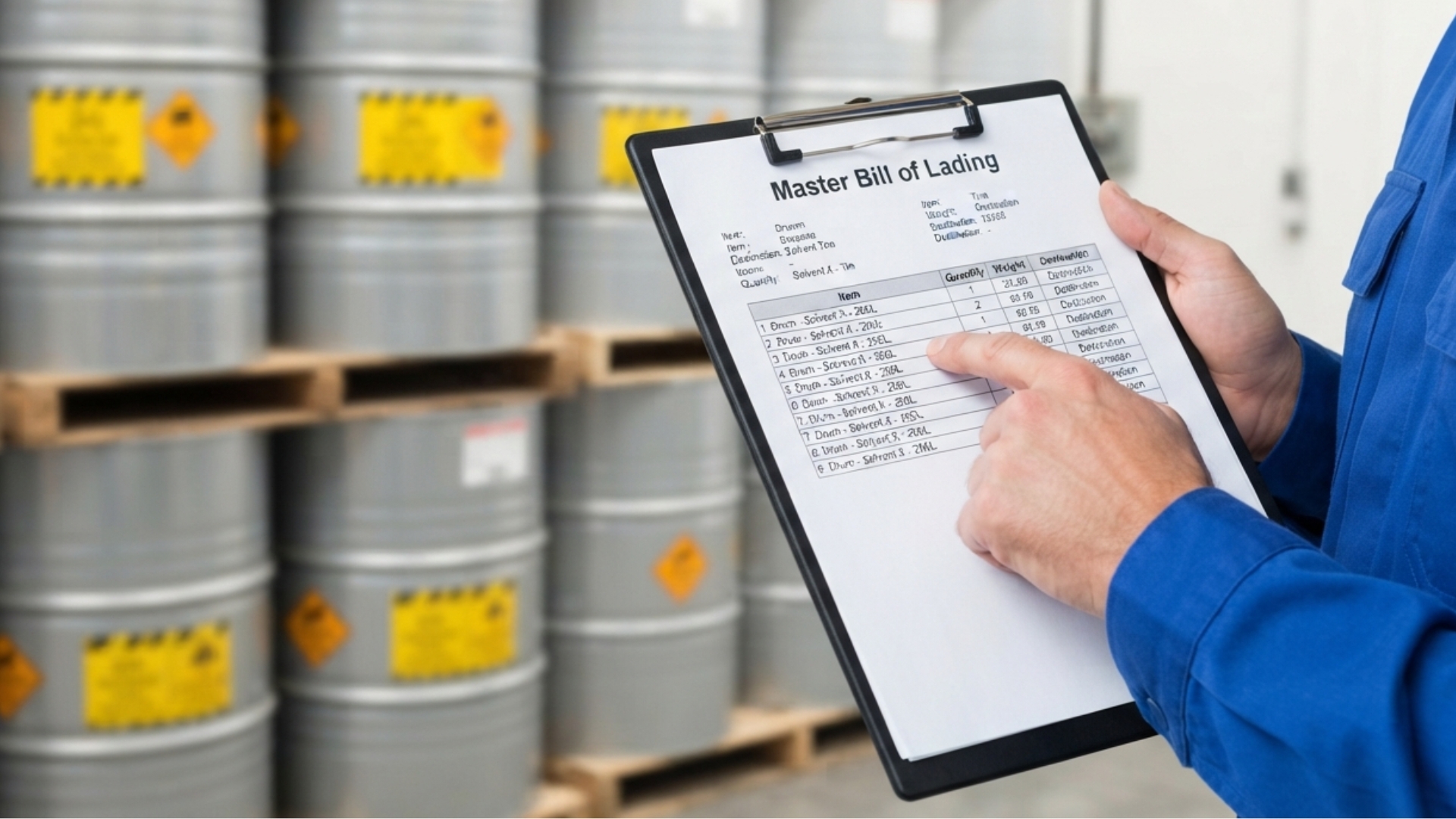
Every drum of solvent, every box of fluorescent tubes, every pallet of part-used paint that leaves a British business travels with a passport. Lose the passport, forge it, or fill it in carelessly, and the consequences land not on the waste but on the business that produced it.
That passport is the hazardous waste consignment note, and it has a reputation for being complicated that it no longer quite deserves. Handled with a competent contractor, the producer’s share of the work is modest: describe honestly, check carefully, file for three years. But understanding what the document does, and where businesses get it wrong, turns the paperwork from a nervous formality into genuine protection.
Here is the plain-English version we give every new customer.
What The Note Is And Why It Exists
General business waste moves on waste transfer notes, the everyday paperwork of the duty of care. Hazardous waste gets the enhanced version because the stakes are higher: the consignment note records exactly what the waste is, including its classification codes and hazard properties, how much is moving, who produced it, who is carrying it, and which permitted facility is receiving it.
The note travels with the load. Copies stay with the producer, the carrier, and the receiver, and the receiving site confirms what actually arrived. The result is an unbroken chain of custody from your premises to final treatment, which serves two purposes at once: it lets regulators trace any load in the system, and it proves your business handed its most sensitive waste to the right people, described truthfully. When enforcement teams investigate dumped or misrouted hazardous waste, the paper trail decides very quickly who behaved properly.
Retention is at least three years for consignment notes, a year longer than ordinary transfer notes, and they must be producible when the Environment Agency asks. A dated folder, paper or digital, is the whole system a small business needs.
Classification: Where The Real Work Lives
The note is only as good as the description on it, and describing hazardous waste correctly is the technical heart of the whole regime.
Every waste stream carries a List of Waste code, the six-digit classification the industry still often calls an EWC code, and hazardous entries bring hazard properties with them: flammable, corrosive, toxic, oxidising, harmful to the environment, and so on. Those classifications drive everything downstream: what packaging the waste needs, what vehicles and paperwork the transport requires (flammables and corrosives engage the ADR dangerous goods rules), and which facilities may lawfully receive it.
The legal responsibility for accurate description sits with the producer. The practical work is shared with your contractor, and this is exactly where a hazardous waste specialist earns the fee: matching your streams to the right codes, flagging the combinations that must never share a container, and specifying UN-approved packaging, from 60-litre Haz Boxes and drums up to 1000-litre IBCs, that is fit and legal for storage and transport.
And when nobody knows what something is, the answer is chemistry, not optimism. It is illegal to carry hazardous chemicals that have not been identified. Unlabelled drums, inherited stock, the mystery bottles at the back of the store: our in-house chemists sample and analyse unknowns and produce the reports that make lawful disposal possible. The forgotten corner of a chemical store is precisely how our laboratory clearance work usually begins.
The Mistakes That Actually Get Businesses In Trouble
After years of collections across mainland UK, the same handful of paperwork failures accounts for nearly every problem we see.
The optimistic description. Mixed solvents logged as one solvent, contaminated materials described as clean, the awkward stream squeezed under a friendlier code. Misdescription is an offence on its own, and it sabotages the physical safety chain: wrong code means wrong packaging, wrong transport class, wrong treatment. The honest description is always cheaper than the consequences of the flattering one.
The missing file. Notes signed, then lost. Three years of retention means nothing if retrieval means an archaeology project. One folder, one naming habit, thirty seconds per collection: that is the entire discipline, and it is also the first thing an inspector asks for.
The unauthorised shortcut. The consignment system only protects loads that stay inside it: authorised carrier, permitted destination, note in hand. The van that will take the drums for cash operates outside the system, and so, legally, does the business that loaded it. Checking a carrier’s registration takes one minute on the public register; ours is CBDU258345.
The storage drift. Waste accumulating unlabelled, incompatible chemicals sharing a bund, aerosols in the sun. The note documents the movement, but the duty of care starts at storage, and UN-approved containers with honest labels are what make collection day quick instead of complicated.
What Working With A Specialist Actually Looks Like
The reassuring truth is that a competent contractor absorbs most of this burden, and the producer’s experience becomes simple.
You describe what you have, with photographs where useful; where identity is uncertain, sampling and analysis come first. We advise the classification, supply the right containers, and prepare the consignment note. Collection happens on a confirmed date, typically within 5 to 7 working days anywhere on the UK mainland up to Glasgow and Edinburgh. You check the note against reality before signing, keep your copy, and file it. Where destruction evidence matters, recalled products, branded goods, sensitive stock, certificates follow as standard.
That is the entire experience, repeated per collection, whether the load is a single Haz Box or a tanker. The businesses that find hazardous waste paperwork painful are almost always carrying a contractor who leaves the thinking to them.
Frequently Asked Questions About Consignment Notes
What is a hazardous waste consignment note?
The legal document accompanying every hazardous waste movement: contents, codes, quantities, producer, carrier, destination. It is the chain of custody for your most sensitive waste.
How long must we keep them?
Three years minimum, retrievable on request. A single dated folder satisfies the whole obligation.
Who classifies the waste?
Legal responsibility: the producer. Technical work: shared with a competent contractor, who matches codes, hazard properties, and packaging. Unknowns are analysed before they travel, because carrying unidentified chemicals is illegal.
Do small businesses need consignment notes?
Yes, for every movement, however small. A good provider prepares the note; the producer checks, signs, and files.
What if waste is misdescribed?
An offence in itself, a physical safety risk, and the end of the protection the paperwork provides. Describe honestly, always.
Does Priority Haz handle the paperwork?
Yes: classification support, in-house chemical analysis for unknowns, UN-approved packaging, consignment notes prepared for every collection, and destruction evidence where required, under licence CBDU258345.
Paperwork As Protection, Not Punishment
The consignment note system exists because hazardous waste, badly handled, hurts people and poisons ground. Handled well, the same system is your business’s proof of good conduct, one honest page at a time.
Priority Haz makes those pages easy: classification guidance, analysis, compliant containers, confirmed collection dates across mainland UK, and every note prepared and copied properly. Request a quote or a callback at priorityhaz.co.uk, and let the passports look after themselves.

