
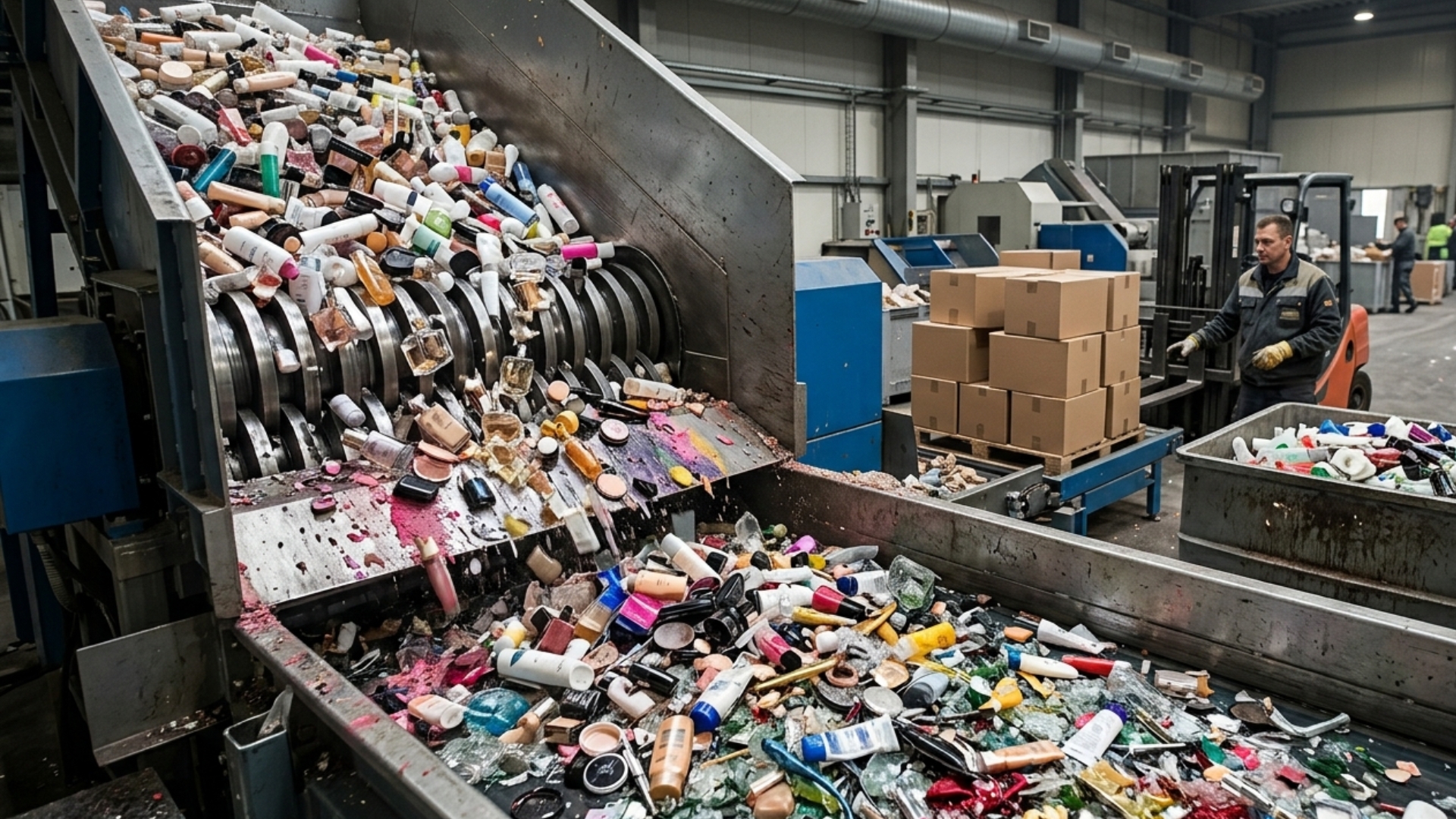
Somewhere in a distribution centre right now sits a pallet nobody wants: perfume from a discontinued line, cosmetics past their stability date, a returned batch with damaged seals, or the aftermath of a recall notice. It cannot be sold. It cannot be donated. And, awkwardly for everyone standing near it, it cannot simply be thrown away.
Beauty stock occupies a strange corner of the waste world where three problems overlap: the products are frequently hazardous (fragrance is mostly alcohol, and highly flammable), the transport is regulated (bulk perfume travels under dangerous goods rules), and the brand is exposed (stock that escapes destruction has a way of reappearing on marketplaces, at car boot sales, and in counterfeit supply chains).
Which is why the industry’s answer is not disposal but destruction: documented, certificated, irreversible. Here is how it works, and why the certificate matters as much as the skip.
Why The Bin Is Not An Option (Even For Face Cream)
Start with the chemistry, because it surprises people outside the industry.
Perfume and fragrance products are flammable liquids. Eau de toilette runs largely on ethanol; aftershaves, body sprays, and setting sprays keep similar company, and aerosols add pressurised propellants. In retail single units this is everyday stuff; palletised, it is a fuel store, and it falls squarely under the ADR dangerous goods regime for transport: correct UN packaging, documentation, and carriers equipped and qualified to move it. We carry large quantities of perfume under exactly these rules, which is not a sentence every waste company can say.
Cosmetics more broadly contribute their own hazardous entries: nail varnishes and removers (solvents), aerosol lines, alcohol-based sanitisers and toners, oxidising hair developers, and the chemical odds-and-ends of any production or filling operation. The classification and consignment note disciplines from our paperwork guide apply in full.
So the general waste route fails on legality before it fails on anything else. But for branded goods it fails somewhere worse: the open skip is where grey markets go shopping. Stock that leaves as “waste” and resurfaces as “bargain” is a trading standards problem, an allergen and stability liability with your name on the label, and a gift to counterfeiters who cut genuine packaging into fake supply chains. The bin does not just break rules; it leaks brand.
What A Destruction Service Actually Promises
Destruction differs from disposal in one word: evidence.
A proper service takes responsibility for stock from collection to certificated end, and the certificate is the product. Evidence of destruction comes as standard where required: formal confirmation that the specific consignment, the recalled batch, the returned lines, the discontinued range, was destroyed, when, and by what route. That document is what insurers require before paying stock claims, what auditors and HMRC expect behind write-offs, what licensors demand when branded goods exit the market, and what recall files need to close.
The physical process backs the paper. Collection in appropriate packaging under ADR where quantities demand it; secure handling that keeps sellable-looking goods away from temptation; and destruction at permitted facilities by routes matched to the material, flammables to energy recovery where their calorific value does something useful, packaging separated for recycling where practical, residues properly treated. Destruction and environmental responsibility travel together; a recall need not be a landfill event.
Scale flexes in both directions: a few boxes of damaged customer returns ride as easily as a national recall or a warehouse clearance, and the certificate arrives at every size. For a salon or small retailer, the same items in modest volumes often ride the Haz Box route with the rest of the workplace’s hazardous smalls.
The Recall Playbook: When Speed And Paper Both Matter
Recalls are where this service earns its keep, because they arrive unplanned and graded urgent, with regulators, retailers, and press all watching the clock.
The playbook that keeps them boring:
- Quarantine fast. Recalled stock is segregated, marked, and locked away from picking faces and staff sales the hour the notice lands. The gap between “recalled” and “quarantined” is where units escape.
- Count and record. Batch numbers, quantities, locations. The destruction certificate can only ever be as good as the inventory it certifies, and recall auditors reconcile to the unit.
- Move under the right rules. Fragrance and aerosol lines in volume are dangerous goods; the collection is planned accordingly, packaging supplied, ADR observed, consignment paperwork prepared, on a confirmed date, anywhere on the UK mainland up to Glasgow and Edinburgh.
- Destroy and certificate. Evidence of destruction closes the file for every stakeholder at once, and the batch can never embarrass anyone again.
- Debrief the residue. Recalls shed side-streams, contaminated packaging, wash-downs from affected lines, sampling waste, which have their own compliant routes while the vehicle is already booked.
The same sequence, minus the urgency, serves the quieter events: seasonal range ends, rebrand transitions, stability-date sweeps, and the perpetual trickle of returns too compromised to restock. Steady producers put destruction on a schedule and stop thinking about it, which is the correct amount of thinking.
Frequently Asked Questions About Cosmetics And Perfume Destruction
How do businesses dispose of unsold cosmetics and perfume?
Via certificated destruction: ADR-compliant collection where quantities demand, destruction at permitted facilities, evidence of destruction issued. General waste is neither legal nor brand-safe.
Why is perfume classed as dangerous goods?
It is mostly alcohol, and bulk flammable liquid travels under ADR: correct packaging, papers, and carriers. A pallet of fragrance is freight with a flash point.
What is evidence of destruction?
The certificate proving specific stock was destroyed, the document insurers, auditors, HMRC, licensors, and recall files all ask for. For branded goods it is the deliverable.
Is it all landfill?
No: fragrance typically fuels energy recovery, packaging is separated where practical, and residues are treated at permitted facilities. Destruction can be the environmentally sound route.
Can you handle small quantities?
Yes: from boxes of returns to national recalls, same certification throughout, with Haz Box routes for salon-scale volumes.
Which areas do you cover?
Mainland UK from Bedford, Glasgow and Edinburgh included, on confirmed dates under licence CBDU258345, with ADR capability for large fragrance consignments.
Let The Pallet Stop Being A Problem
Unsellable beauty stock only gets more expensive to own: it occupies bonded space, tempts pilferage, and holds open files that insurers and auditors want closed. One certificated collection converts all of it into a single sheet of paper that ends every argument.
Priority Haz destroys cosmetics and perfume from single cartons to recall volumes, ADR transport included, evidence of destruction as standard where required. Request a quote or a callback at priorityhaz.co.uk, and give the discontinued line the dignified, documented ending your brand deserves.

